Christchurch Hospital trusts FireQA by Clarinspect with it’s Passive Fire penetrations
If you've ever worked on a hospital site, you know the stakes are higher than almost anywhere else. Every cable, duct and pipe that crosses a fire wall needs to be sealed correctly, documented properly, and kept in that state for the life of the building. Get it wrong, and you're not just failing an audit, you're putting patients and staff at risk.
That's the world Canterbury District Health Board (CDHB) operates in every day. Following the 2011 earthquakes, Christchurch Hospital went through a huge amount of rebuild and refurbishment work, and today the site has around 18,000 fire penetrations across its buildings. With more being added with every new project, the team needed a way to manage the full passive fire lifecycle properly, from the moment an installer seals a penetration through to ongoing inspection and maintenance for years afterwards.
We're proud that they chose FireQA by Clarinspect to help them do it.
The problem with paper
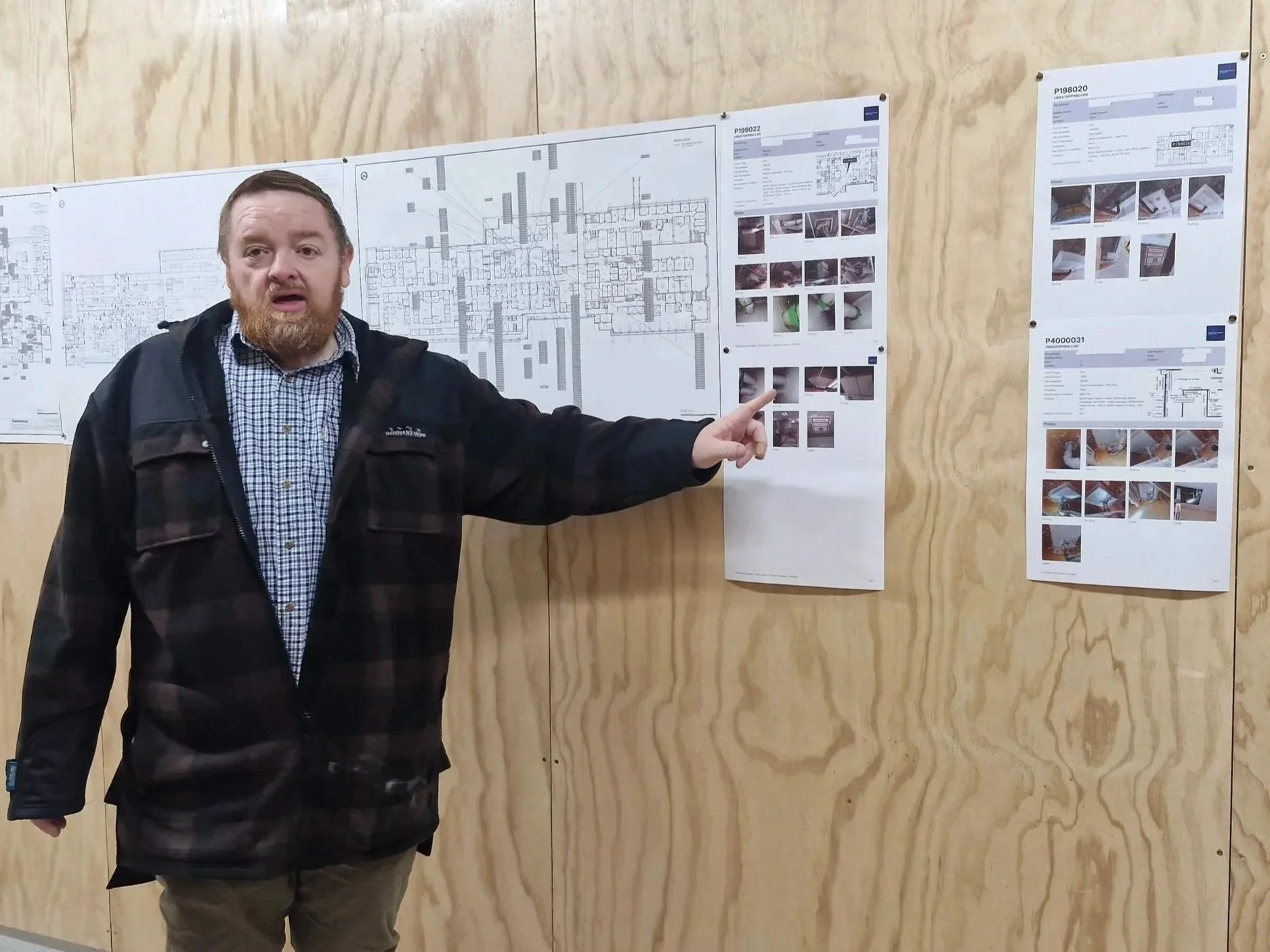
Simon Hemmings, CDHB's Passive Fire Manager, had already taken a genuinely thoughtful approach to the problem, one that earned him an NZIOB award nomination. But even the best process falls over if it's still running on paper and spreadsheets. Installers need a fast, reliable way to record their work on site. Independent inspectors need to check that work and generate reports they can stand behind. And CDHB needed all of that data flowing back to them electronically, without double handling or lost paperwork.
That's exactly the gap FireQA was built to close.
What Simon’s team did differently
A few things set this system apart from a standard build log, and they've become something of a model for how passive fire documentation should work.
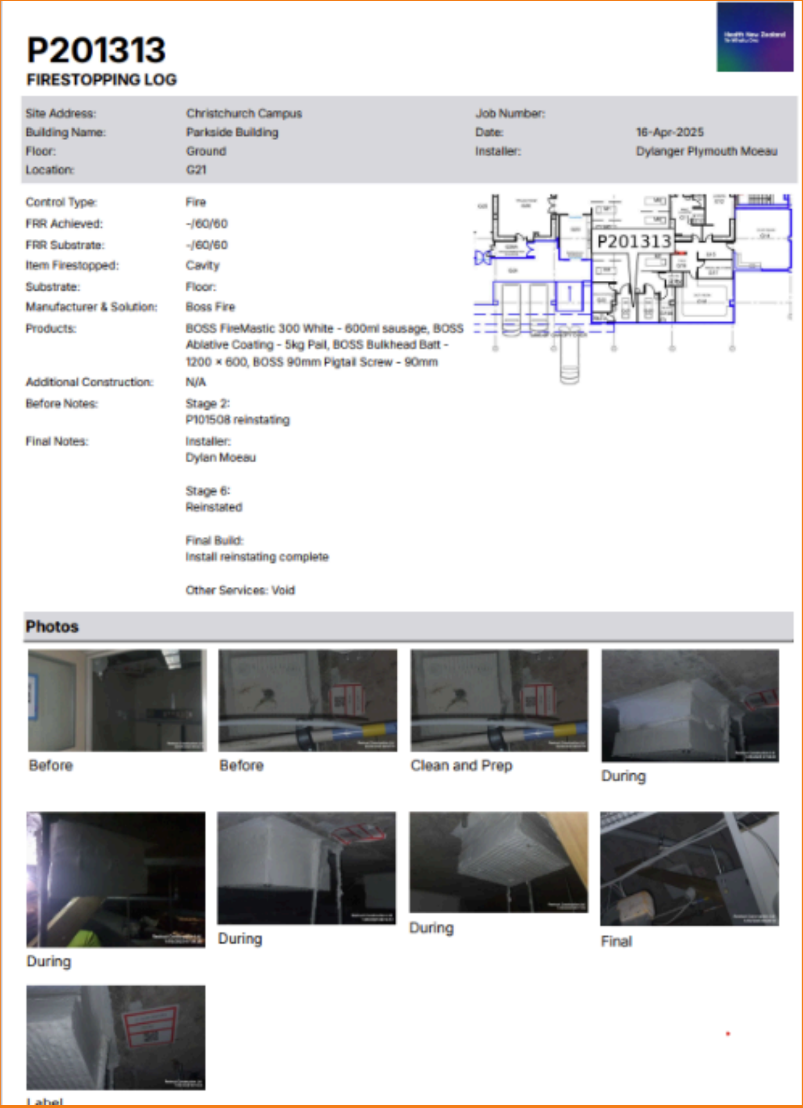
Before, during and after photos are enforced for every penetration. A finished, sealed penetration doesn't tell you much on its own, but a date and time stamped photo of each stage means a fire engineer can actually see whether the correct solution was used for that particular hole in the wall.
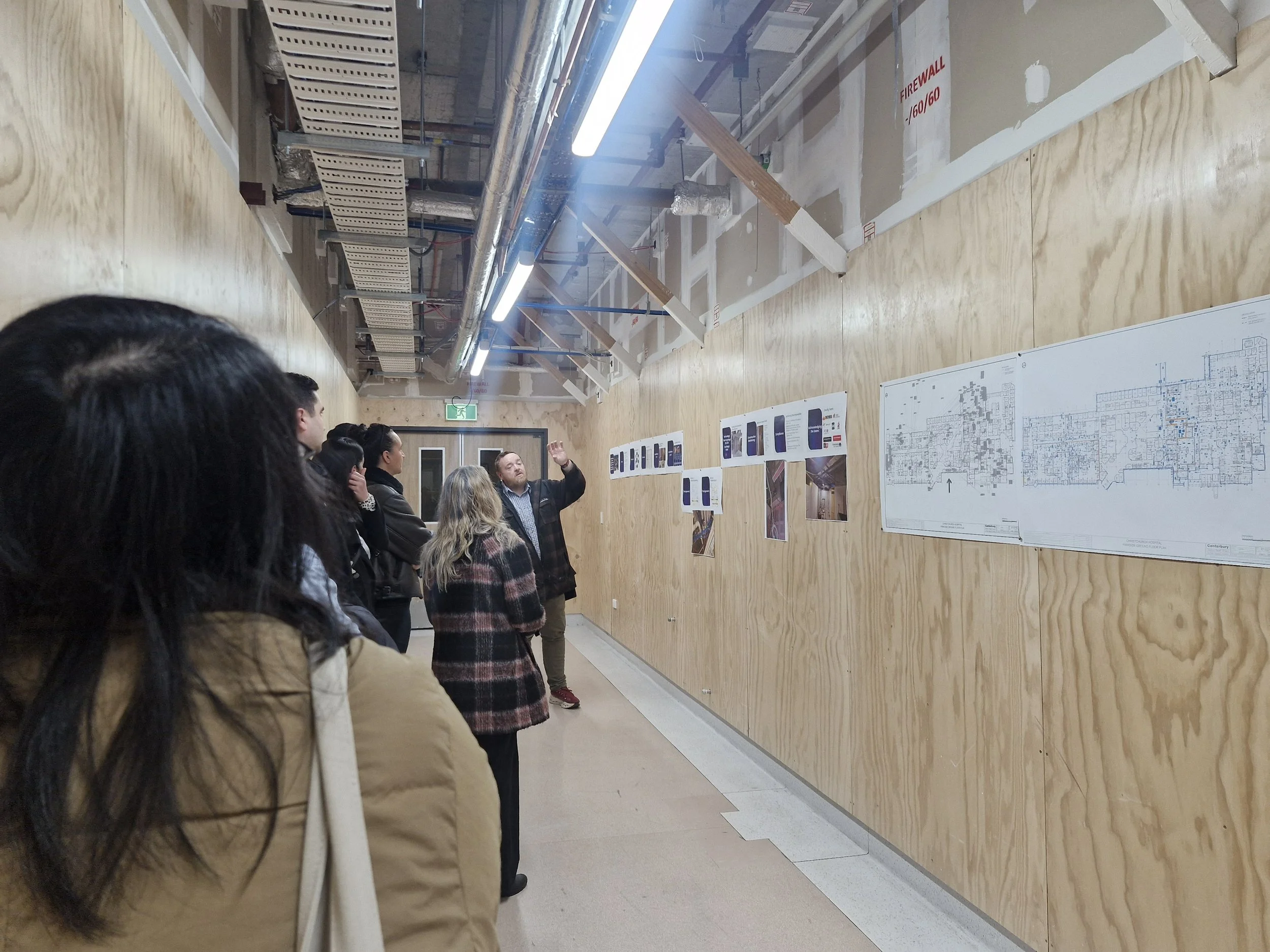
Marked up floor plans sound simple, but they matter. Every penetration is pinned to the plan, so it can be found, repaired, maintained and inspected again the following year without anyone guessing.
All of this feeds into the 4072.1 register, with a single PDF generated for each penetration. It's the level of detail that's becoming standard in construction, but the real value is getting it into the hands of IQPs and auditors, so when they do a sweep in a couple of years' time, they have the photos of exactly what was signed off. If there's an extra cable through that wall that's a different colour to what's on record, it's immediately obvious something needs investigating.
Each penetration has a QR code with its unique reference. These stickers can be scanned by anyone to get the unique code ensuring there is one number for each penetration, keeping the data clean and also keeping that number right there next to the penetration.
Because Christchurch Hospital is such a large campus with multiple teams working across it at once, FireQA also lets those teams work separately without seeing each other's data. Everyone can input their own records without one team's work getting mixed up with or overwritten by another's.
What it’s meant for CDHB
The result is a single system that covers the whole loop. Installers record and QA their own work on mobile phones or tablets. Fire engineers inspect and report using that same data. Simon gets everything, from every installer, at the click of a button. No more chasing paperwork, no more re-entering the same information twice, and a level of consistency that's hard to achieve any other way.
As Simon put it:
"The Clarinspect system is so easy to use. The installers record the installation on their tablets, sync it to Clarinspect where the installers QA it and approve it. I can then get all data and reports at the click of a button, from all installers."
And on the bigger picture:
"Clarinspect enabled the CDHB to achieve the level of consistency required in recording the passive fire programme."
(Simon's original comments referred to the system as Clarinspect, now known as FireQA by Clarinspect.)

Why this matters beyond Christchurch
Hospitals are one of the toughest environments to get passive fire compliance right, high penetration counts, constant refurbishment, zero tolerance for gaps in the register. If a system can handle that scale and complexity while actually making life easier for installers and inspectors on the ground, it can handle almost any commercial site.
That's exactly why FireQA is now the system behind Dunedin Hospital's passive fire programme as well, and why it's being used on large campuses more broadly, including for AS 1851 inspections in Australia, where annual inspection of every penetration is now a legal requirement.
It's the same approach we bring to every hospital and healthcare project we work on. If you're managing passive fire compliance across a large or complex estate and you're tired of paper trails and double handling, we'd love to show you what this could look like for your team.
Check out our Canterbury District Health Board case study on how FireQA by Clarinspect further helped them - Case Study